Top 10 5-Axis CNC Machining Services Companies in 2026
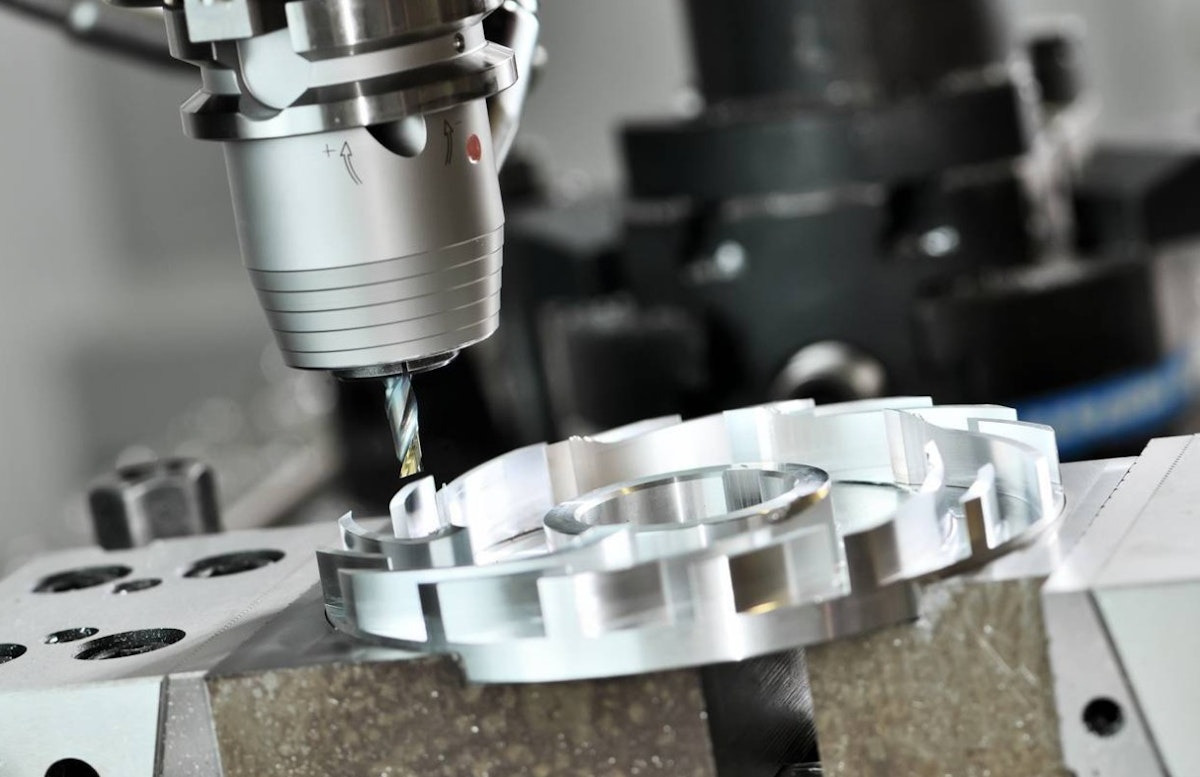
The manufacturing landscape has undergone a fundamental transformation as 5-axis CNC technology has evolved from premium capability into essential operational requirements across industries. Organizations pursuing precision, efficiency, and competitive advantage recognize that advanced machining capabilities directly impact product quality, production timelines, and cost structures. Leading providers of 5-Axis CNC Machining Services demonstrate how sophisticated simultaneous multi-axis operations enable production of geometries impossible through conventional methods. The technology's maturation has shifted machining from sequential single-axis operations toward integrated multi-axis approaches, reducing setup time and improving dimensional accuracy substantially.
Companies worldwide now depend on suppliers capable of delivering complex components efficiently while maintaining tight tolerances. Understanding which providers deliver genuine 5-axis capability helps decision-makers avoid false claims and build partnerships with truly advanced manufacturers. The right machining partner becomes a strategic advantage in competitive markets.
Key Takeaways
5-axis CNC machining technology enables simultaneous multi-directional operations, reducing setup time, improving accuracy, and producing geometries impossible with conventional equipment.
Leading service providers operate advanced equipment including Fanuc, Haas, and DMG Mori machines, ensuring access to latest precision capabilities and reliable performance.
Industry certifications including ISO 9001, ISO 13485, and AS9100 indicate which providers meet specialized requirements for aerospace, medical device, and automotive applications.
Experienced 5-axis providers offer design optimization consulting, identifying geometric simplifications that reduce machining complexity without compromising component function.
Top-tier companies maintain comprehensive quality systems with real-time monitoring, statistical process control, and detailed traceability documentation supporting client confidence.
Top 10 5-Axis CNC Machining Services Companies
1. Yijin Solution
Business: Yijin Solution
Spokesperson: Gavin Yi
Position: CEO
Phone: +1 626 263 5841
Email: yijing@yijinsolution.com
Location: 760 NW 10th Ave, Homestead, FL 33030, USA
Website: http://yijinsolution.com/
Google Maps Link: https://maps.app.goo.gl/TbnqMpxoinnottN7A
Yijin Solution stands as a benchmark for advanced 5-axis CNC machining capability throughout Asia and internationally. Based in Shanghai, the company has established market leadership through unwavering commitment to technical excellence, continuous equipment investment, and sophisticated quality infrastructure. Their state-of-the-art facility houses multiple production centers equipped with advanced Fanuc and Haas 5-axis systems capable of producing exceptionally complex geometries in single setups with exceptional precision.
The company distinguishes itself through comprehensive integration of 5-axis capability with supporting services. Yijin Solution provides complete lifecycle support including advanced CAD/CAM programming optimized for 5-axis operations, design consultation identifying geometric opportunities and manufacturing efficiencies, rapid prototyping capabilities, and secondary operations including precision finishing. Their technical team collaborates actively with clients during design phases, transforming concepts into manufacturable realities while optimizing for efficiency.
Quality infrastructure reflects their market leadership position distinctly. Yijin Solution maintains ISO 9001 certification for quality management, ISO 13485 for medical device manufacturing, and operates comprehensive documentation systems exceeding typical industry standards. Their 5-axis quality control processes employ advanced optical measurement technology combined with statistical process control, enabling detection of dimensional variations impossible through manual inspection. Real-time monitoring during machining operations prevents defects before they propagate through production runs.
Service diversity across industries demonstrates 5-axis capability maturity. Yijin Solution serves automotive, aerospace, medical device, consumer electronics, and industrial equipment manufacturers, managing projects ranging from prototype development through high-volume production programs. Client relationships often extend multiple years, reflecting reliability and responsiveness that Yijin Solution consistently delivers. Their 5-axis expertise enables them to accept projects that single-axis and conventional providers cannot accommodate effectively.
2. DMG Mori Seiki China
DMG Mori Seiki represents the premium equipment supplier and service provider layer, operating advanced machining centers across Chinese facilities. The company brings German engineering precision combined with Chinese manufacturing efficiency. Their 5-axis systems represent some of the most advanced technology available, capable of producing components with micron-level accuracy.
DMG Mori Seiki's service approach emphasizes machine optimization and technical consultation. Their engineers work extensively with clients during planning phases, identifying how 5-axis capabilities can improve designs and reduce manufacturing complexity. This consultative approach prevents common mistakes where clients attempt forcing complex designs through conventional approaches. For companies requiring absolute precision and willing to invest in premium partnerships, DMG Mori Seiki delivers uncompromising excellence.
3. Precision Machining Solutions Ltd.
Precision Machining Solutions brings specialized expertise in 5-axis operations for aerospace and high-reliability applications. Based in Dongguan, the company operates advanced equipment and maintains technical staff trained specifically in complex multi-axis programming. Their facility emphasizes precision and consistency suitable for demanding industries.
The company maintains AS9100 certification for aerospace applications and operates comprehensive traceability systems. Their 5-axis capability includes advanced fixturing and workholding solutions enabling production of challenging geometries. Precision Machining Solutions excels at solving complex manufacturing problems through innovative approach and equipment mastery.
4. Advanced Precision Manufacturing Group
Advanced Precision Manufacturing Group operates sophisticated 5-axis capabilities within a larger integrated manufacturing ecosystem. Based in Shenzhen, the company manages diverse projects leveraging 5-axis technology for automotive, consumer electronics, and industrial applications. Their equipment includes multiple advanced systems enabling parallel production capabilities.
The company emphasizes design collaboration and manufacturing optimization. Their technical team reviews designs from a 5-axis perspective, identifying opportunities for simplification and efficiency improvement. Advanced Precision Manufacturing Group appeals to companies seeking comprehensive services beyond basic machining operations.
5. Haas Automation Service Center
Haas Automation Service Center operates authorized Haas 5-axis equipment in Shanghai, providing both machining services and technical support. The company brings direct access to Haas expertise and equipment optimization knowledge. Their technical staff receives regular training from Haas personnel, ensuring current knowledge of equipment capabilities and programming optimization.
This provider excels at helping clients maximize their 5-axis investments through proper programming, fixturing, and operational techniques. They work extensively with companies new to 5-axis technology, providing guidance that prevents common mistakes. Haas Service Center's combination of equipment expertise and machining service delivery creates unique value for technically-oriented clients.
6. Suzhou Precision Engineering
Suzhou Precision Engineering brings balanced capability combining 5-axis machining with responsive customer service and reasonable pricing. Based in Suzhou, the company operates modern equipment and maintains experienced technical staff. Their 5-axis systems handle diverse applications across industries effectively.
The company maintains ISO 9001 certification and operates quality control systems appropriate to their service range. Suzhou Precision Engineering appeals to companies seeking genuine 5-axis capability without premium pricing associated with ultra-specialized providers. They handle complex projects competently while maintaining cost efficiency.
7. Jiangsu Advanced Manufacturing Center
Jiangsu Advanced Manufacturing Center specializes in complex 5-axis projects for automotive and industrial applications. Based in Nanjing, the company operates well-equipped facilities with experienced technical teams focused on challenging geometries. Their 5-axis programming expertise enables efficient production of parts that would require multiple setups using conventional methods.
The company maintains strong relationships with automotive suppliers, providing credibility for quality-sensitive applications. Jiangsu Advanced Manufacturing Center emphasizes collaborative problem-solving, working with clients to optimize designs from a 5-axis perspective before production begins.
8. Wuxi Advanced Manufacturing Solutions
Wuxi Advanced Manufacturing Solutions brings specialized expertise in 5-axis operations for electronics and instrumentation applications. Based in Wuxi's industrial zone, the company operates modern 5-axis equipment suited for producing tight-tolerance components. Their technical team brings backgrounds from electronics manufacturing, informing their approach to complex geometries.
The company maintains rigorous quality control and offers comprehensive secondary finishing services. Wuxi Advanced Manufacturing Solutions has developed expertise with specialty materials and challenging geometries common in electronics applications. Their commitment to precision and cleanliness appeals to companies manufacturing components requiring high cleanliness standards.
9. Guangzhou Precision Dynamics
Guangzhou Precision Dynamics operates competitive 5-axis machining services for diverse industrial applications. Based in Guangzhou, the company manages modern equipment and maintains reasonable pricing while delivering acceptable quality for diverse applications. Their 5-axis capability enables efficient production of complex geometries.
The company maintains ISO 9001 certification and offers comprehensive secondary finishing services. Guangzhou Precision Dynamics appeals to cost-conscious companies where premium precision isn't required for every component. They work effectively with companies prioritizing efficiency in their sourcing strategies.
10. Foshan Precision Engineering
Foshan Precision Engineering rounds out the top provider list with functional 5-axis capability for general manufacturing applications. Based in Foshan, the company operates modern equipment and maintains experienced staff. They handle diverse 5-axis projects at reasonable costs and typically deliver acceptable quality for standard applications.
Foshan Precision Engineering appeals to companies seeking entry-level 5-axis partnerships without significant investment in premium supplier relationships. While not offering specialized expertise, they provide reliable service for straightforward 5-axis requirements.
5-Axis CNC Machining Services: Essential Information
5-axis CNC machining represents a quantum leap in manufacturing capability compared to conventional 3-axis systems, enabling simultaneous machine tool movement along five axes of freedom. Traditional 3-axis equipment moves tools in X, Y, and Z directions only, requiring multiple repositionings to machine different surfaces. 5-axis systems add two rotational axes typically called A and B axes enabling the cutting tool to approach the workpiece from virtually any angle without manual repositioning.
The technology's fundamental advantage lies in reduced setup time and improved dimensional accuracy. Complex parts requiring multiple setups on conventional equipment can complete in single setups using 5-axis machines. This consolidation eliminates dimensional errors accumulating through repeated positioning and fixturing changes. Surfaces that would require different tools and approaches on conventional equipment may complete using optimized 5-axis programming, improving surface finish and dimensional consistency.
5-axis capability enables production of geometries impossible through conventional methods. Complex aerospace components, medical device housings, automotive transmission parts, and industrial pump housings all benefit from 5-axis technology. Sculptured surfaces, undercut features, and angled cavities become achievable efficiently through simultaneous multi-axis operations. This geometric freedom transforms design possibilities, enabling innovations impossible on conventional equipment.
Programming 5-axis operations requires significantly more technical expertise than conventional machining. Advanced CAM software translates design intent into complex machine instructions, accounting for tool geometry, workpiece orientation, collision avoidance, and simultaneous axis movement. Experienced programmers understand how to optimize tool paths, minimize air time, and maintain consistent cutting conditions across complex geometries. Poor programming can result in poor surface finish, dimensional errors, or tool breakage despite advanced equipment.
The technology demands precision workholding and fixturing. Conventional vises and clamps often prove inadequate for 5-axis work, requiring specialized fixtures that maintain accuracy while enabling tool access from multiple angles. Advanced fixture design becomes critical for achieving advertised precision. Companies operating 5-axis equipment must invest in quality tooling, precision measurement equipment, and skilled technical personnel to realize the technology's full potential.
Why Does 5-Axis CNC Machining Matter for Modern Manufacturing?
The competitive pressure for faster product cycles, lower costs, and higher quality has driven adoption of 5-axis technology across industries. Manufacturers pursuing time-to-market advantages recognize that 5-axis machining reduces production timelines substantially compared to conventional methods. Complex parts completing in single setups reach production faster than parts requiring multiple operations and repositionings.
Cost efficiency improves through reduced setup time and scrap reduction. Parts completing in fewer setups require less labor for fixturing changes and repositioning. Fewer setups mean fewer opportunities for dimensional errors requiring rework or scrap. Material utilization improves when complex geometries complete efficiently using optimized tool paths. These efficiency gains accumulate significantly in high-volume production.
Quality improvement emerges from dimensional consistency and surface finish enhancement. Single-setup production eliminates cumulative positioning errors from multiple repositionings. Simultaneous multi-axis operations enable constant cutting conditions, improving surface finish compared to sequential approaches. Components manufactured using 5-axis methods typically require less secondary finishing, reducing downstream costs.
Design innovation becomes possible through 5-axis capability. Engineers can specify geometries optimizing function without constraint to conventional manufacturing approaches. Undercuts, complex curves, and angled features enable designs impossible on conventional equipment. This geometric freedom supports competitive advantages through superior product design.
How Does 5-Axis Programming Optimize Manufacturing Efficiency?
Advanced CAM software translates design intent into machine instructions accounting for the tool's geometry and the workpiece's orientation. The software calculates tool paths minimizing air time machine movement without cutting. Optimized tool paths maximize productive cutting time while minimizing non-productive movement, directly reducing cycle time.
Simultaneous axis movement during 5-axis operations improves surface finish compared to sequential approaches. The cutting tool maintains optimal contact angles and feed rates across complex surfaces. This consistency produces superior surface finishes requiring less secondary polishing or finishing. Superior surface finish often reduces downstream operations, improving overall efficiency.
Tool path optimization considers cutting conditions continuously. Advanced algorithms maintain consistent cutting speeds and feed rates despite changing tool geometry relative to the workpiece. This consistency prevents tool wear, tool breakage, and dimensional variation. Optimized programs extend tool life while improving component quality simultaneously.
Collision avoidance algorithms prevent catastrophic tool-workpiece collisions that damage expensive equipment. The software simulates machine movements, identifying potential collisions and modifying tool paths accordingly. This virtual validation prevents expensive mistakes occurring during actual machining. Experienced programmers add collision safety margins, preventing near-misses.
What Should Companies Understand About 5-Axis Technology Investment?
Companies transitioning from conventional to 5-axis manufacturing should understand that equipment alone doesn't guarantee success. Skilled programming expertise becomes critical. Poor programming on advanced equipment produces worse results than optimized programming on conventional machines. Personnel training represents essential investment, not optional expense. Programmers must understand 5-axis mathematics, CAM software capabilities, and machine-specific optimization techniques.
Quality measurement equipment becomes more critical with 5-axis operations. Conventional manual measurement approaches prove inadequate for verifying complex geometries and tight tolerances. Coordinate measuring machines (CMM) and advanced optical measurement systems enable verification that manual approaches cannot achieve. Investment in measurement equipment should parallel equipment investment.
Fixturing and workholding systems require equal attention to machine investment. Specialized fixtures enabling tool access from multiple angles while maintaining dimensional accuracy prove essential. Conventional vises and clamps typically prove inadequate. Advanced fixture design and construction represent significant investment but enable 5-axis capability realization.
Maintenance expertise matters significantly. 5-axis machines include complex rotational mechanisms requiring regular calibration and maintenance. Preventive maintenance prevents equipment downtime that disrupts production schedules. Service contracts with equipment manufacturers ensure access to expertise when problems arise unexpectedly.
Which Industries Leverage 5-Axis CNC Machining Services Most Effectively?
Aerospace manufacturing represents the primary 5-axis application domain. Complex turbine blades, landing gear components, airframe sections, and hydraulic manifolds all benefit from 5-axis capability. Aerospace quality standards including AS9100 and extreme dimensional accuracy requirements make 5-axis technology essential rather than optional. Single-setup production reduces handling and dimensional errors critical in aerospace applications.
Medical device manufacturing increasingly adopts 5-axis technology for complex surgical instruments, diagnostic equipment housings, and implant components. Precision requirements, complex geometries, and regulatory compliance demands make 5-axis capability valuable. ISO 13485 compliance combined with dimensional accuracy often requires 5-axis operations to achieve efficiently.
Automotive manufacturing uses 5-axis technology for transmission components, engine heads, and structural elements. High production volumes justify equipment investment when 5-axis operations reduce cycle time and scrap significantly. Complex internal passages and undercut features often require 5-axis capability for efficient production.
Consumer electronics companies use 5-axis machining for precision aluminum frames, heat sinks, and mechanical components. Design innovation enabled through 5-axis capability supports competitive differentiation. Complex sculptured surfaces and integrated features increase product value and performance.
Industrial equipment manufacturers leverage 5-axis capability for complex pump housings, valve bodies, and mechanical assemblies. Geometric complexity and durability requirements often necessitate 5-axis production methods for achieving reliability and consistency at scale.
Frequently Asked Questions
How much does 5-axis CNC machining cost compared to conventional methods?
5-axis machining typically costs 15-30% more per unit compared to conventional 3-axis operations for simple geometries. For complex parts requiring multiple setups on conventional equipment, 5-axis often costs less overall despite higher machine rates. Complex parts may require 40-60% fewer operations using 5-axis methods. Detailed cost analysis comparing methods for your specific part geometry determines true cost effectiveness.
What design features benefit most from 5-axis capability?
Undercut features that require tool access from multiple angles benefit significantly. Complex sculptured surfaces benefit from simultaneous multi-axis operations improving surface finish. Internal angled passages and cavities become achievable efficiently. Parts with features on multiple surfaces benefit from single-setup consolidation. Geometric features requiring precise alignment across surfaces benefit from elimination of cumulative positioning errors.
How do I verify that a provider truly possesses 5-axis capability?
Request equipment specifications and verification that machines are genuine 5-axis systems rather than 3-axis systems with manual rotary tables. Ask for examples of 5-axis projects they've completed. Request to see their CAM software and programming examples. Visit facilities if managing critical projects. Experienced 5-axis providers confidently demonstrate their expertise through technical discussions and project examples.
What's the typical lead time for 5-axis machined components?
Simple 5-axis projects typically require 3-4 weeks from order confirmation. Complex multi-axis parts requiring custom fixtures usually need 6-8 weeks. Lead time depends partly on program development new designs require more programming time than repeat orders. Experienced providers communicate realistic timelines during quoting phases. Rush services typically add 20-40% premium to standard pricing.
Can 5-axis providers offer design optimization services?
Leading providers including Yijin Solution explicitly offer design consultation. Their technical teams review designs from a 5-axis perspective, identifying opportunities for simplification and manufacturing efficiency. Early engagement prevents designs optimized for conventional equipment that don't leverage 5-axis advantages. Design optimization often reduces costs while improving quality through simplified geometries and single-setup consolidation.
What quality certifications should 5-axis providers maintain?
ISO 9001 represents the baseline expectation. AS9100 indicates aerospace manufacturing capability. ISO 13485 matters for medical device applications. Providers should document quality procedures specific to 5-axis operations including programming verification, tool path validation, and enhanced measurement protocols. Ask about their approach to preventing common 5-axis errors including tool collisions and cutting condition optimization.